A Paphos Hills Wine Village Route in Autumn
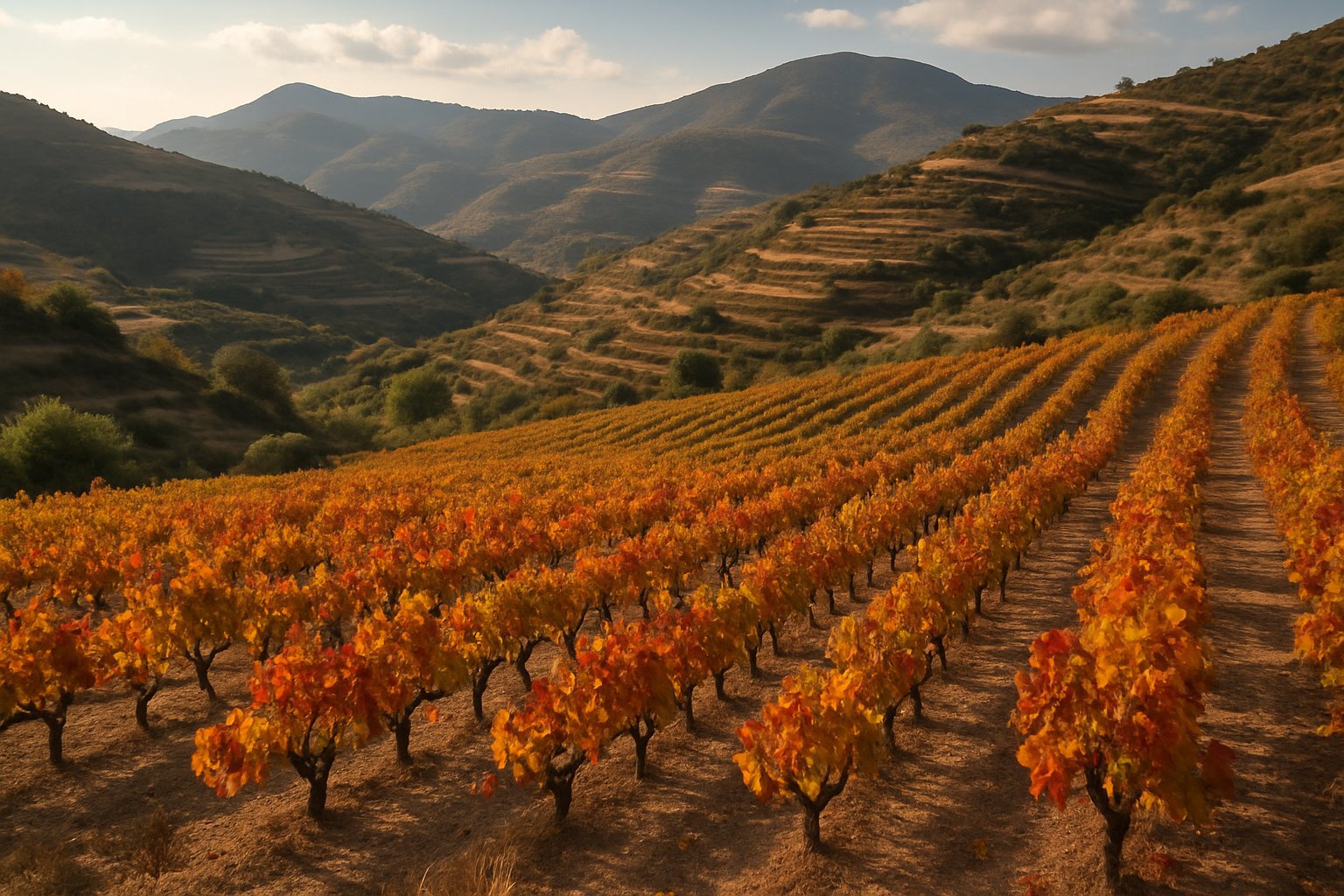
October is a good month to drive up into the Paphos hills, with the vines turning gold, the presses still busy and tavernas full of locals. Here is how to plan a self-drive wine day around Kathikas and the Laona plateau, and how to time it right.
Why October is the month to go
By October, most of the grape picking in the Paphos hills is usually finished. Higher vineyards and later-ripening red varieties can still be coming in during the first weeks of the month. The midday heat of summer has gone, so a day of winding hill roads, vineyard views and long lunches is far more comfortable than it would be in August.
Autumn is also when the villages get busy with the by-products of the harvest. Grape must is boiled down for palouzes and soutzoukos, the nut-filled strings of set grape juice you will see hanging in village shops. The leftover skins go into making zivania, Cyprus's clear grape spirit. You may see these at roadside stalls and kafeneia as well as at wineries.
The route at a glance
The wine country closest to Paphos town sits on the Laona plateau, the high ground above the Akamas coast. It is centred on Kathikas, roughly half an hour's drive north of Paphos. A comfortable loop looks like this:
- Paphos to Kathikas. Head north along the coast towards Pegeia, then climb inland onto the plateau. The road rises quickly, and the views back over the sea are worth a stop.
- Kathikas. This is your main wine stop and the best place for lunch. It is a stone-built village surrounded by vineyards, and the winery below is on its doorstep.
- The Laona villages. From Kathikas, continue through the plateau villages of Pano and Kato Arodes, Ineia and Drouseia. The roads are quiet, there are vineyards on both sides, and you get glimpses of the Akamas peninsula.
- Back via the Polis road. Drop down towards the Paphos–Polis road and return south through the vine-growing country around Stroumbi and Tsada, which is the edge of the Vouni Panagias–Ambelitis wine area.
These areas match two of the official Cyprus wine routes, Laona–Akamas and Vouni Panagias–Ambelitis. The Deputy Ministry of Tourism publishes maps and village lists for both on visitcyprus.com. They are useful if you want to extend the day or add more winery stops.
Vasilikon Winery, Kathikas
The anchor of this route is Vasilikon Winery on the edge of Kathikas. It is a modern winery with a walk through the history of winemaking, tastings and a small restaurant, so you can taste and eat in one place if you prefer not to move the car again.
The winery lists opening hours of 08:30–18:00, and the restaurant is open 10:00–16:00. Check which days it is open before you set out. Aim to arrive late morning, after the tour groups have thinned out and while there is plenty of time before closing.
It is worth phoning ahead to confirm the winery is receiving visitors that day and to book a tasting, particularly during or just after harvest, when staff are busy in the cellar.
What to taste
The Paphos hills are a good place to try Cyprus's own grape varieties, which you will rarely find outside the island.
- Xynisteri is the island's signature white grape. It makes fresh, light and often citrusy wines that suit grilled halloumi and meze.
- Maratheftiko is the indigenous red that winemakers are most excited about. It has deep colour, dark fruit and enough structure for lamb and village sausages.
- Mavro is the traditional workhorse red grape, often used in lighter or rosé styles.
- Zivania is the grape-based spirit, served ice-cold in small glasses. If you are driving, try a sip at most.
Many wineries also make wines from international grapes such as Shiraz, Cabernet Sauvignon and Chardonnay. Comparing a local grape with a familiar one side by side is a good way to understand what makes the Cypriot wines distinctive.
Timing the tail end of the harvest
The harvest in the Paphos hills generally runs from late summer into autumn. White grapes such as Xynisteri are usually picked first, and reds and higher-altitude plots come in later. In practice, this means:
- Early October gives you the best chance of seeing late picking, tractors full of grapes on the village roads and fermentation under way in the cellars.
- Mid to late October is quieter in the vineyards. Wineries have more time for visitors, and the leaves begin to colour.
Harvest dates change every year with the weather, so if seeing the picking matters to you, ask the winery when you call to book. For wine-related events and village festivals in the district, check the Paphos Regional Board of Tourism at visitpafos.org.cy.
Eating along the way
Kathikas has a cluster of village tavernas, many with vine-shaded terraces, and it is the natural lunch stop. Order a meze if you have time. Autumn menus often feature slow-cooked dishes, village sausages and seasonal greens, and the house wine is usually local. If you would rather keep things simple, the restaurant at Vasilikon lets you taste and eat without getting back behind the wheel.
Keep an eye out on the way home for village shops and stalls selling soutzoukos, palouzes, local honey and bottles of zivania. These make far better souvenirs than anything in the airport.
Practical tips for drivers
- Choose a designated driver or spit. Spittoons are standard at tastings, and nobody will think twice if you use one. Cyprus enforces drink-driving laws strictly.
- Allow plenty of time. Hill roads are narrow and winding, and you may meet tractors at this time of year. Plan on a full day rather than squeezing the route into an afternoon.
- Fill up before you leave Paphos. Petrol stations are fewer once you are up on the plateau.
- Check days and hours. Confirm with Vasilikon which days it is open, and note that other rural wineries may also keep limited hours.
Opening hours, tasting arrangements and harvest timing can all change, so check before you go by contacting the winery directly. A quick call the day before is the easiest way to avoid driving up the hill to a locked gate.
Leave a Reply